


Art Trail
Follow the story...
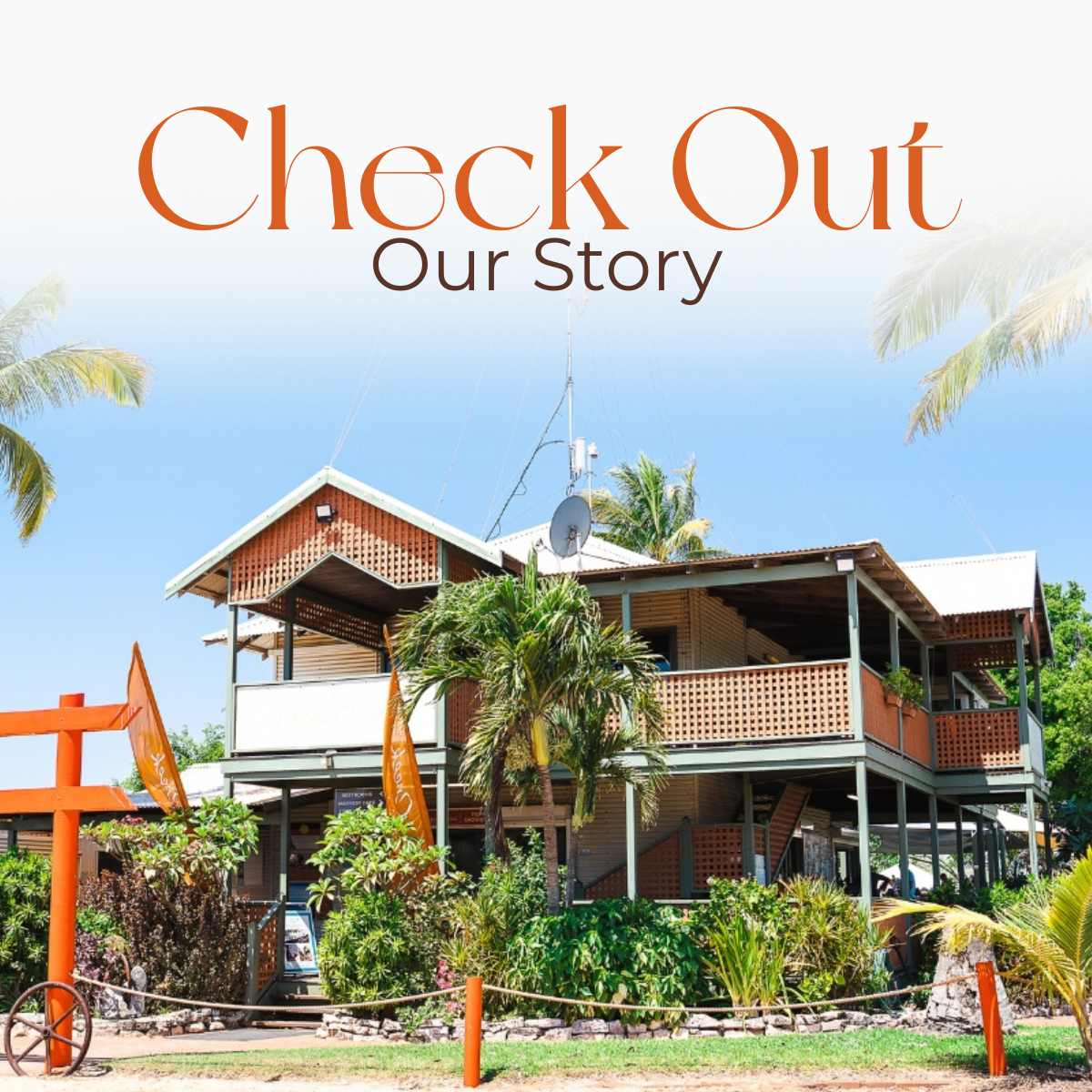
Follow along with the Art Trail, learning about the local flora and fauna and the history of Broome, the Banfields and Willie Creek Pearl Farm as amazing sculptures, created by Artist in Residence Donna Fortescue, give you a unique insight.
Meet the Artist
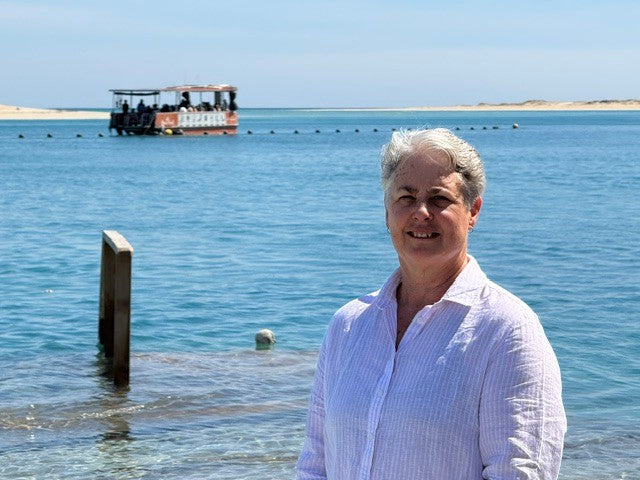
Donna Fortescue
Born in 1964, Donna Fortescue is the eldest daughter of Donald and Valda Banfield. Her childhood was shaped by country life on a wheat and sheep farm in Tincurrin, Western Australia, where resourcefulness, creativity and hard work were part of daily life. Her teenage years were spent boarding at PLC in Perth and later at Narrogin Senior High School. In 1985, she married Geoff Fortescue, and together they raised two sons, Keegan and Hayden.
Donna’s artistic journey began in 1987 when, pregnant with her first child, she returned to complete Year 12 TAE Art. This decision sparked a long‑term commitment to creative practice, eventually leading to a Bachelor of Arts (Visual Arts), completed in 2000.
Her early career unfolded in recreation centre management, but the pull of the arts remained strong. Donna later joined Bunbury Regional Art Gallery, working across arts administration, gallery operations and installation in roles that deepened her understanding of professional art practice. During these years, her personal art remained a passionate side pursuit. She exhibited widely, including an invitation to show work in Canberra. In 2015, the Museum of Old Parliament House acquired one of her pieces, a milestone that gave her the confidence to fully embrace the title of “artist.”
The arrival of COVID‑19 in 2020 reshaped Donna’s priorities. She stepped away from gallery administration to pursue art full‑time, opening the door to one of her most significant creative ventures: the Willie Creek Pearls Art Trail. This evolving project has allowed her to merge sculpture, storytelling and to build a sense of place, by creating works that celebrate the Kimberley, its people, its pearling heritage and to celebrate a magical part of Australia.
For Donna, the Art Trail has been a huge learning experience, a rewarding adventure, a revelation and a dream opportunity to showcase her artworks in one of her favourite places on earth. The support of my family and the Willie Creek Pearls staff family has been pivotal to the project's success and we all hope you enjoy your visit to Willie Creek Pearl Farm.

Frankie the Fish Finder
This artwork begins with a meeting of one boat and one bird, a Far Eastern Curlew, one of the world's most endangered shorebirds can be seen poised on the bow of a wooden pearling lugger, another creature shaped by tide and distance now vanishing from the world it once defined.
The Curlew travels close to 10,000 kilometres each year, from breeding grounds in the marshes of eastern Russia and northern China down through the East Asian-Australasian Flyway to mudflats like Roebuck Bay, where it probes the tidal shallows with that long, impressive down-curved bill searching for crabs and molluscs for a few short months before turning north again. It is a bird built entirely for passage, never quite arriving, never quite staying. They arrive in the Northwest of Australia in late August and leave again late February and March. The species ‘Numenius madagascariensis’ is listed as critically endangered.

Cleopatra & Marc Antony
How do Cleopatra and Marc Antony find themselves on toilet walls in a remote corner of Australia? It’s a fair question, and one answered through the blend of history, humour and pearling lore that inspired this artwork.
Cleopatra, the last queen of Egypt, and Marc Antony, the Roman general who became her lover and political ally, remain one of history’s most famous couples. Their relationship blurred the boundaries between power and passion, shaping the final years of the Roman Republic. Known for their extravagant lifestyle, they lived a story marked by ambition, loyalty, betrayal and tragedy.
One of their most legendary moments is the wager over who could host the most lavish banquet. Cleopatra famously won by dissolving a priceless pearl in vinegar and drinking it, a gesture so extravagant that Pliny the Elder described the pearl as the largest in history. The tale suggests she believed the drink held aphrodisiac powers, reinforcing her reputation for drama, intelligence and theatrical flair. Pearls, then as now, were rare, precious and worthy of a queen.
This artwork brings that opulence into playful contrast with everyday life at Willie Creek Pearl Farm. After all the feasting, scheming and seduction, even Cleopatra and Marc Antony would eventually need to use the toilet. Their presence on the door becomes a light‑hearted nod to history, pearls and human nature that is reminding visitors that even legends share ordinary moments.


Watch Out Rosalie
"Watch Out Rosalie" pays tribute to celebrated Australian/New Zealand artist Rosalie Gascoigne, whose transformative use of found materials including road signs, that reshaped the way we see everyday objects. This sculpture echoes her spirit while turning attention to a very real issue on Australian roads: the growing amount of wildlife struck by vehicles.
Across the country, land development, new subdivisions and expanding road networks continue to push animals out of their natural habitats. Country drivers know the risks well as kangaroos account for around 90% of animal collisions on open roads, a statistic that speaks to both their abundance and their vulnerability.
Rosalie the Roo stands as a reminder to slow down, stay alert and respect the creatures that share our landscapes. Created during a time when many Australians were holidaying closer to home, she encourages travellers to be mindful as they explore the Kimberley and beyond.
The Willie Creek Pearl Farm family hopes Rosalie’s presence prompts both reflection and care. She is a playful warning, a nod to Gascoigne’s legacy, and a call to protect the wildlife that makes our country so extraordinary. Safe travels and enjoy your time in Broome.


The Magnificent "Muddie"
The mud crab is one of the Kimberley’s most prized delicacies, sought after by recreational fishers for its size, strength and unmistakable flavour. Willie Creek is home to an abundance of these remarkable creatures, known locally as “Muddies.” Two species live in the region: the larger green mud crab (Scylla serrata) and the brown mud crab (Scylla olivacea). The green species can reach an impressive 2.5 kilograms and span up to 30 centimetres, living in burrows throughout tidal creeks, estuaries and mangrove‑lined waterways. Exposed at low tide, they are most commonly caught between June and December.
Catching a mud crab in Willie Creek is an experience in itself. Casting a pot into pristine waters while crocodiles lurk nearby adds a certain thrill, making the eventual chilli crab lunch taste even better. The sculpture in Crab Corner features “Claude the Muddie,” a vigilant guardian protecting his family from fishermen, crocodiles and sharks that regularly patrol the creek. His raised claws are a reminder of the crab’s formidable strength; once a mud crab clamps down, a finger can be lost in an instant.
This artwork celebrates the resilience, character and culinary significance of the mud crab, honouring a creature deeply woven into Kimberley life.


Donatello Turtle
Flatback and Green Sea Turtles are regular visitors to the waters around Willie Creek, gliding through the tides in search of food. Each year, adult females return to Cable Beach to lay their eggs between October and January, with hatchlings emerging from December to February. A single turtle can lay up to 100 eggs, and although many young turtles wait for the safety of a full moon to begin their journey to the sea, it can take several determined days of digging before they reach the surface.
This sculpture began its life as “Tommy the Tool Man Turtle,” named during construction for the way his open mouth made him look as though he were chatting. When he arrived in Broome, the family renamed him “Donatello,” after the Teenage Mutant Ninja Turtle that was an inventor and thinker whose creativity and gadgets echoed the spirit behind the sculpture. Donatello the Ninja Turtle also wore the purple headband, my favourite colour. He was designed and built by myself and my husband Geoff, using tools passed down from Debbie Banfield’s father, Robert Tak Cho Chan. Robert’s story is woven into Broome’s own history: He married Shirl Fong, a Broome local who, like many women and children, was evacuated to Perth in 1942 during the Japanese bombing. Their daughter Debbie later returned to Broome to pursue her teaching career, where she met Robert Banfield, continuing a family legacy deeply rooted in the town.
Donatello now stands proudly at Willie Creek, he is very warm to the touch in the Kimberley sun so be careful not to climb on his back but he is always ready for a photo, and forever up for a chat.


Banfield Family History
This metal and wire installation traces the defining moments that shaped the Banfield family into the strong, connected and multi‑generational team it is today. Three generations still work side by side, a rare and treasured achievement that underpins everything we do.
The story begins in 1963, when Don Banfield married Valda Higgs and moved to a 4,000‑acre wheat and sheep farm in Tincurrin. Life on the land was a steep learning curve for a 24‑year‑old, but those early years were filled with adventure. Family history is marked by moments of courage, such as Don carrying his father James down a windmill after his first heart attack and by enterprise, from developing a Murray Grey stud to young Robert’s first business breeding black‑faced sheep.
As interest rates rose in the 1980s, Don took on extra work driving trucks, buses and taxis, leading to a chance meeting with Lord Alister McAlpine. Their friendship and business partnership brought the family to Broome in 1989 to run Broome Buslines, the first airport transfer service for Cable Beach Club Resort. Tours followed, showcasing the Kimberley’s dramatic landscapes.
Don passed away suddenly in 1991, but Valda, Robert and Darren continued the business, later shifting their focus to Willie Creek Pearl Farm. Over time, the family added the Pearl Luggers Museum and a commercial pearling lease at Quondong Point which is one of only 17 licences in Western Australia. Melissa and her husband Scott expanded the legacy further with the Broome Explorer Bus.
Willie Creek Pearls has since earned multiple WA Tourism gold medals, three inductions into the Tourism Hall of Fame and two Sir David Brand Awards (the highest honour in WA tourism). Our story remains deeply tied to Broome, its pearling history and its remarkable wildlife, including Nigel the Crocodile, who still cruises the creek looking for his pearl necklace.
Today, we are proud to collaborate with Marine Biomedical on PearlBone™, a groundbreaking medical innovation using Pinctada maxima shell to support future bone‑growth treatments.
On behalf of the Banfield family and the entire Willie Creek Pearls team, we welcome you to the farm and wish you safe travels ahead.


Willie 111 - Pearl Lugger
"Willie III" celebrates one of the last pearling luggers to work the waters of Broome, a graceful survivor from a bygone era. No longer part of a hard‑working fleet, she now carries visitors on gentle sunset cruises, drifting past Cable Beach with the same charm she once carried into the pearling grounds.
This sculpture has its own journey. One of the very first sculptues made by Donna Fortescue during her arts degree back in 1998. First displayed in the Willie Creek Pearls showroom at Cable Beach, it eventually found its way back to the Farm, where it was repaired, restored and given a new lease on life. Built from old wooden floorboards, canvas, copper and mixed materials, it captures the romance of sailing these iconic vessels, with creaking timbers, sails luffing in the breeze of the wide Kimberley skies and the slow rhythm of tides that shaped Broome’s early pearling history.
"Willie III" stands as a tribute to the luggers that once defined the coast, inviting visitors to pause, remember and to imagine the wind in their hair and to feel a little of the nostalgia of being carried across the water.


No Grit, No Pearl
"No Grit, No Pearl" honours Hasahiro Akune, known simply as Hiro, and the generations of divers whose skill, courage and sacrifice shaped Broome’s pearling industry. Many divers came from local and Asian communities, working in harsh, dangerous conditions that claimed far too many lives. This sculpture recognises their resilience and the quiet strength required to work beneath the tides.
Just as an oyster labours around a tiny seed or grain of sand to create a pearl, the people of the pearling industry have poured dedication, hardship and heart into building Broome’s reputation as a world‑class pearling centre. Every pearl carries a story of effort, both human and ocean‑made.
The sculpture itself has its own journey. Originally created for the Shinju Matsuri Festival, it travelled in two parts and made its debut on Cable Beach. Hiro’s helmet is built around a pearling buoy, and the netting comes from pearl panels, all materials drawn directly from the industry he has devoted his life to.
We invite you to reflect on what diving once demanded: being trawled beneath luggers, walking the sea floor, searching for shell in near‑darkness. Hiro has lived that history. Today, he continues to seed and harvest pearls and train new technicians at Willie Creek Pearl Farm. His expertise remains vital to every successful harvest.
This artwork celebrates Hiro, the magic of pearl creation, and the grit behind every lustrous pearl.


Barramundi
The Barramundi (Lates calcarifer) is one of northern Australia’s most iconic fish, always celebrated by anglers for its powerful fight and prized in kitchens for its mild, buttery flavour. Versatile and delicate, it remains a favourite on tables across the Kimberley and beyond.
Native to Australia’s northern waters, the Barramundi inhabit estuaries, rivers and coastal creeks, thriving in the tropical regions of Western Australia, the Northern Territory and Queensland. For many First Nations saltwater communities, Barramundi hold deep cultural significance and remain an important traditional food source.
These impressive fish can grow up to 1.8 metres long and weigh as much as 60 kilograms. With their green‑grey backs, silver sides, large mouths and rounded tails, they are perfectly adapted to both fresh and saltwater environments.
This artwork celebrates the Barramundi as both a Kimberley delicacy and a creature woven into the cultural and ecological fabric of northern Australia, it is strong, sleek and always a welcome sight in the water or on the plate.

Terri the Ta-Ta Lizard
The Ta Ta lizard (Lophognathus gilberti) is one of the Kimberley’s most endearing small creatures, instantly recognisable to children and adults alike. Found near water sources across Northern Australia, these agile lizards are known for their remarkable speeds they are often darting away on their hind legs and for the distinctive gesture that gives them their name. When they lift and wave a front leg, it appears as though they are offering a cheerful farewell. While charming to watch, this behaviour is believed to help them cope with hot surfaces, raising their limbs to cool them in the breeze.
In this artwork, the lizard becomes a character in its own right. “Terri the Ta Ta,” as he is affectionately known, stands at the front gate of Willie Creek Pearl Farm, poised mid‑wave. His gesture is both playful and symbolic: a small, spirited ambassador bidding visitors goodbye as they depart the pearl farm. Terri’s presence captures the light‑hearted encounters that shape the Kimberley experience and celebrates those unexpected moments when wildlife and people cross paths in ways that feel both humorous and memorable.
The sculpture celebrates the Ta Ta Lizard’s personality and its connection to place. Terri’s wave becomes an invitation to pause, smile and appreciate the small wonders that inhabit the Kimberley landscape. As visitors leave Willie Creek, he offers a final gesture of goodwill, hoping their stay has been enjoyable and their journey home safe. Through Terri, the artwork honours the region’s unique wildlife and the joy it brings to those who meet it.


One Boat, One Bird
"One Boat, One Bird" begins with a meeting between a wooden pearling lugger and a Far Eastern Curlew, one of the world’s most endangered shorebirds. The bird stands poised on the bow, two creatures shaped by tide, distance and labour, each now fading from the worlds that formed them.
The Far Eastern Curlew travels close to 10,000 kilometres each year, migrating from breeding grounds in the marshes of eastern Russia and northern China down the East Asian-Australasian Flyway to tidal flats like Roebuck Bay. There it probes the mud with its long, down‑curved bill, feeding on crabs and molluscs for a few short months before turning north again. Built entirely for passage, it is a bird that never quite arrives and never quite stays. They reach the northwest of Australia in late August and depart again in February and March. The species, Numenius madagascariensis, is listed as critically endangered.
This sculptural curlew is named after the region and for my friend Kimberley, who visits Broome seasonally and loves to fish. Her recent 116‑centimetre Barramundi catch, is too impressive not to celebrate and sits in playful contrast to the curlew’s more delicate mudflat diet. In the sculpture, Kimberley the Curlew surveys Willie Creek like a ship’s captain through her telescope, while below deck the rats drink B4 rum, snack on cheese and crackers, and cause cheerful chaos. They have developed a taste for the new B4 beverages.
The lugger itself is named for the Sam Male Lugger, registration B4, one of the last commercially operating vessels on the Broome and Kimberley coast. The real boat now rests in Chinatown at Pearl Luggers on Dampier Terrace. Built for the pearling grounds of the Northwest, these luggers carried crews of Japanese, Malay, Filipino, Aboriginal and European workers. Their hulls were scarred by cyclones and salt; their labour reshaped coastlines and communities. Long after the industry waned, their timber frames remain weathered but enduring.
Willie Creek once served as a safe harbour for luggers waiting out storms. The brass plates on the sculpture record cyclones by name, wind speed and category, reminders of the lives, homes, wildlife and vegetation that have been lost to these violent storm systems.
Bringing bird and boat together creates a single moment of stillness inside two long, restless journeys. Steel legs hold the Curlew’s fine balance; its bill, shaped from agricultural tools, carries its strength and tenacity. Beneath it, reclaimed jarrah and recycled ship fittings hold the memory of passage. The rats remind us to enjoy every moment however fleeting.


WCPF ICON WALL - Pearl Panel
Inspired by the traditional pearling panel, this installation weaves together the signature icons of Willie Creek Pearls into a single vibrant “net” of stories. Each symbol, the palm tree, crocodile, pearl shell, pearl diver, lugger and ring capture a different facet of life at the farm. They appear across our buses, boats, tours and marketing, forming a visual language that instantly says Willie Creek Pearls.
Using resin, colour and fragments of broken pearl shell, these icons have been shaped into a textured display that reflects the rhythm of daily work in the company. The palm tree hints at the Kimberley’s tropical edge; the crocodile nods to our resident characters in the creek; the diver honours the skill behind every pearl; the Pearl Lugger recalls Broome’s historic fleet; the ring celebrates the jewellery crafted from nature’s brilliance; and the pearl shell ties it all together as the heart of our story.
This artwork is more than wallpaper, it’s a snapshot of the people, history and environment that make Willie Creek Pearls what it is. A colourful reminder that every icon carries a tale, and every tale is part of the journey.


Willie Creek Pearls Photo Spot
These sculptural rings echo the Willie Creek Pearls logo, symbolising both the perfect pearl and the jewellery crafted to celebrate nature’s artistry. Set against the pristine waters of Willie Creek, this photo spot offers visitors a chance to capture the magic of a landscape shaped by powerful tides and constant change. Every minute and every hour, the creek ebbs and flows shifting its colour, texture and depth, revealing just how remarkable this corner of the Kimberley truly is.
Enjoy your moment here at the Creek, and thank you for making the journey to experience nature at its finest.