


B1
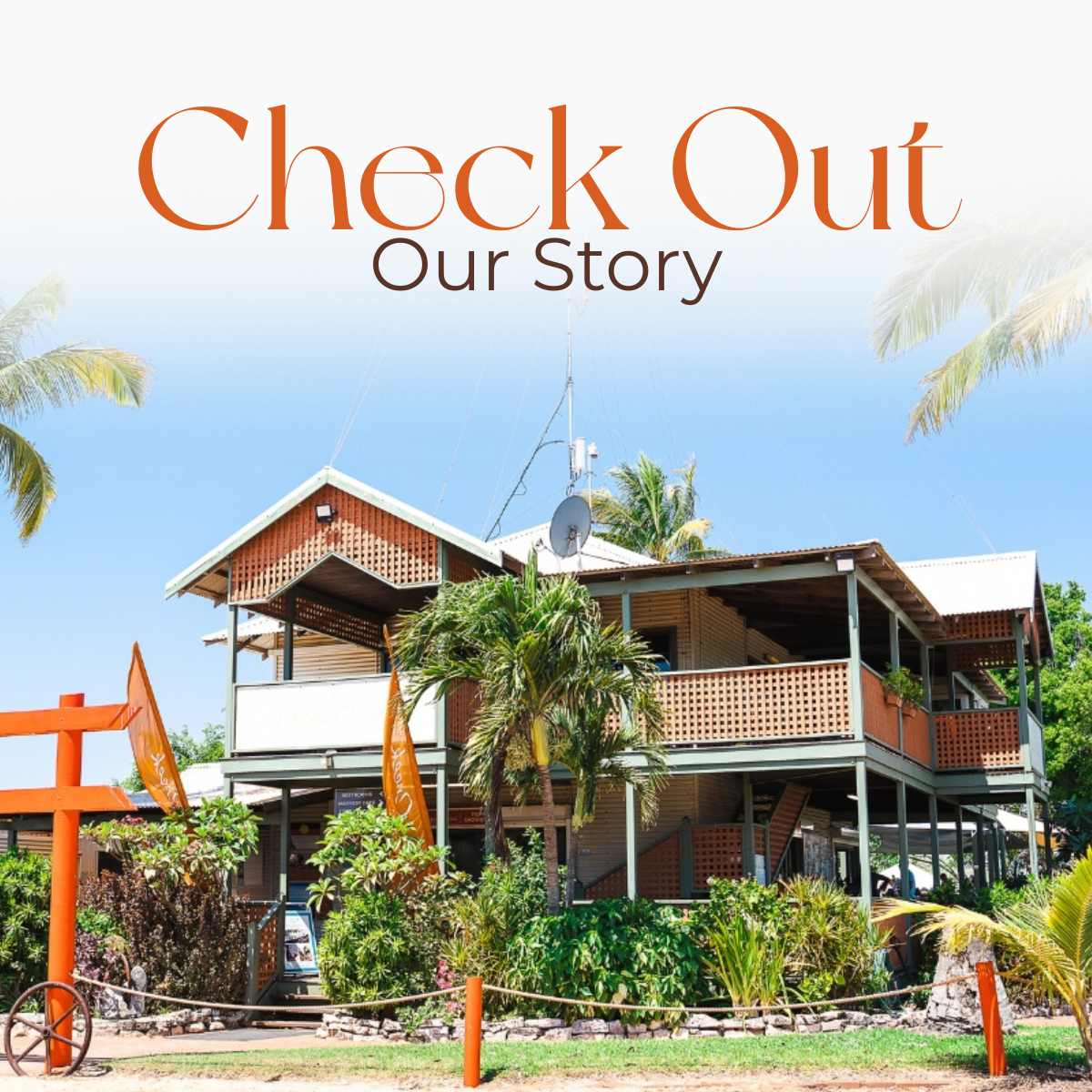
The Willie Creek Homestead was built in 1991 to showcase the pearling industry to visitors and now welcomes guests from all over the world each year. Its architecture is inspired by traditional Broome pearling masters’ cottages. A central block of rooms opens onto a wide verandah that wraps around the house, providing shade and airflow. Lattice shutters help control the heat and offer protection during storms. Similar architectural features can be seen in historic Broome, including the restored Captain Gregory’s House (now an art gallery near Matso’s Brewery). The homestead connects visitors directly to that era and style, while providing a relaxed, welcoming base for the modern pearl farm experience.
B2
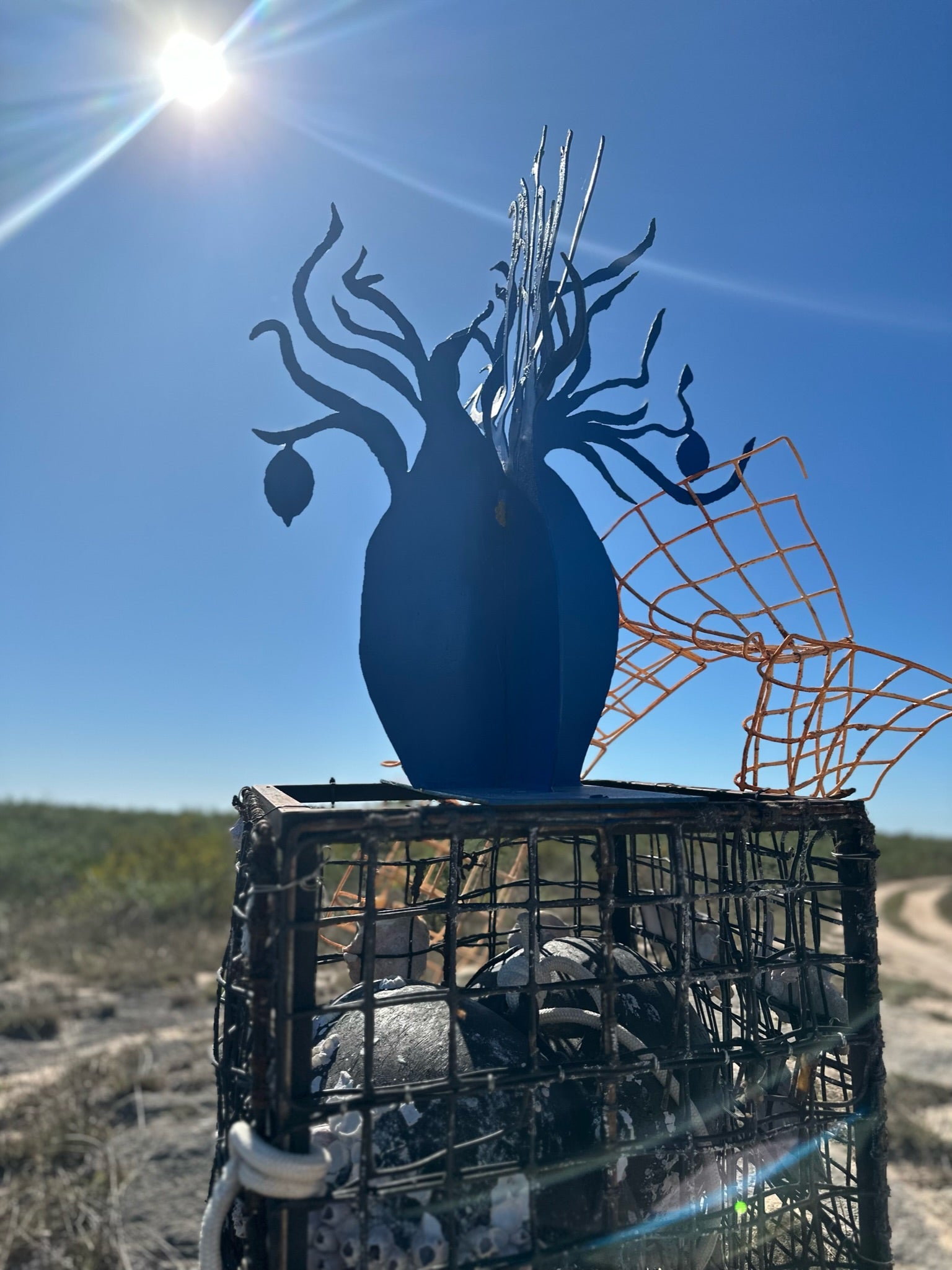
The painted Boab tree on the track is part of the Blue Tree Project, a grassroots mental health initiative that began in Mukinbudin in WA’s Wheatbelt. The project encourages people to talk openly about mental health, and to check in on those around them who may be struggling with depression, anxiety or other challenges. The Boab (Adansonia gregorii) is an iconic symbol of the Kimberley. Its nutritious nuts have a long shelf life and are rich in vitamin C, once used by sailors to help prevent scurvy and maintain health at sea. By painting a Boab blue here on the track, we symbolically link the Wheatbelt to the Kimberley and stand in support of West Australians everywhere. Travelling into a harsh, remote environment with people you may have only just met can be both exciting and confronting. The Blue Boab invites visitors to take a moment to check in with the person next to them and ask, “Are you OK?” It’s a reminder that adventure and wellbeing go hand in hand, and that help and conversation are always important.
Feature name
Share useful information about your product features.
B3
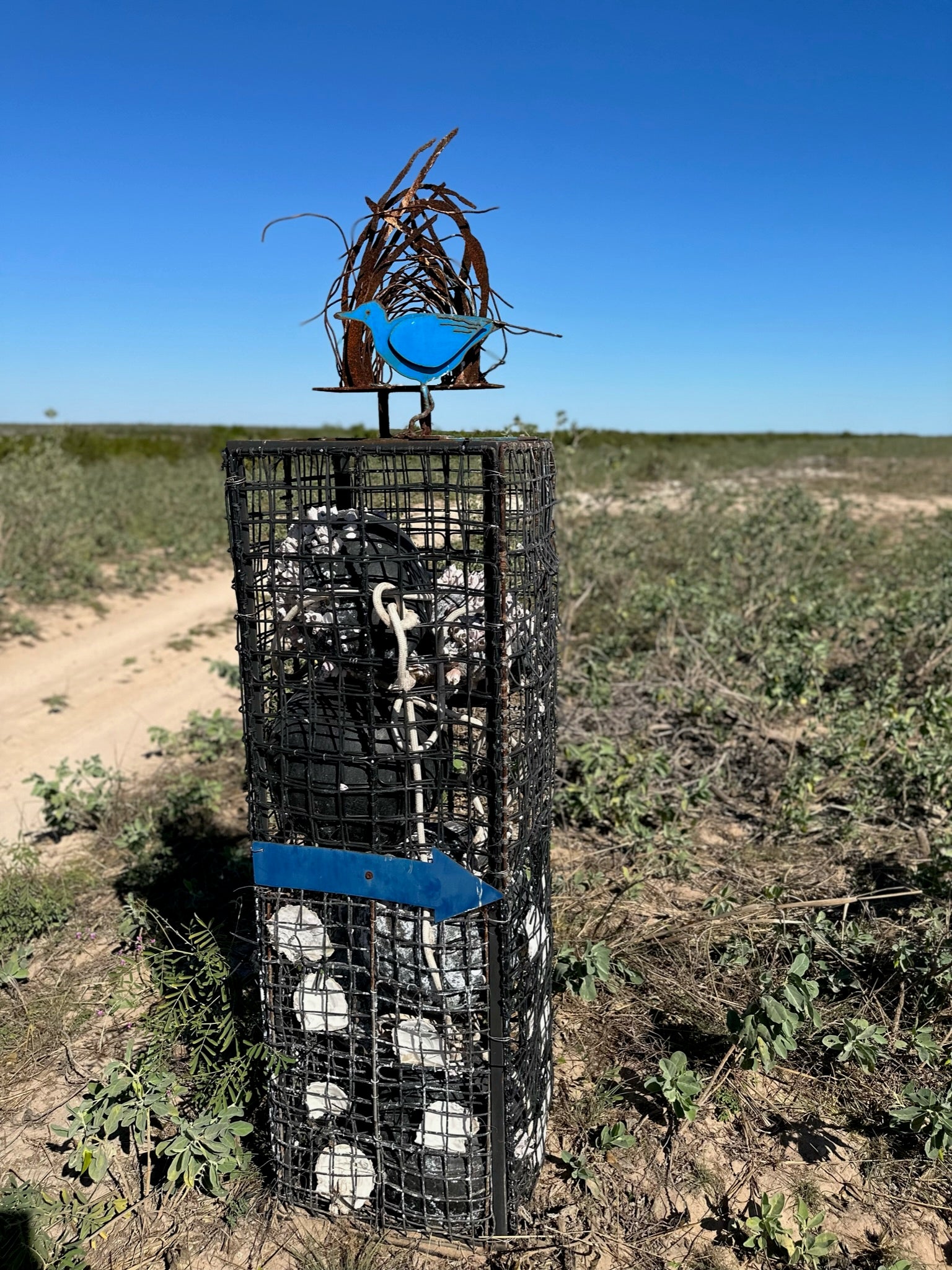
The Great Bowerbird is a clever and creative resident of the Kimberley region. Males build elaborate bowers on the ground in thickets, open forests and tropical woodlands, decorating them mainly with pale or white objects such as snail shells, small pieces of pearl shell, stones, bones, leaves and twigs. The bower itself is an avenue of twigs and grass. Mating takes place in this decorated arena, after which the female departs to build a separate nest in a tree, usually between one and ten metres above the ground. She raises one or two chicks on her own. Each year, the male will either refurbish his existing bower or build a new one in a similar spot. Great Bowerbirds are mostly mid-grey, with darker brown wings and back. Males have a lilac band on the nape of their neck which they can raise and display when trying to impress a female. The bowerbird marker celebrates this small architect of the bush and his love of collecting beautiful things – much like the pearl shells that drew people to Willie Creek.
B4
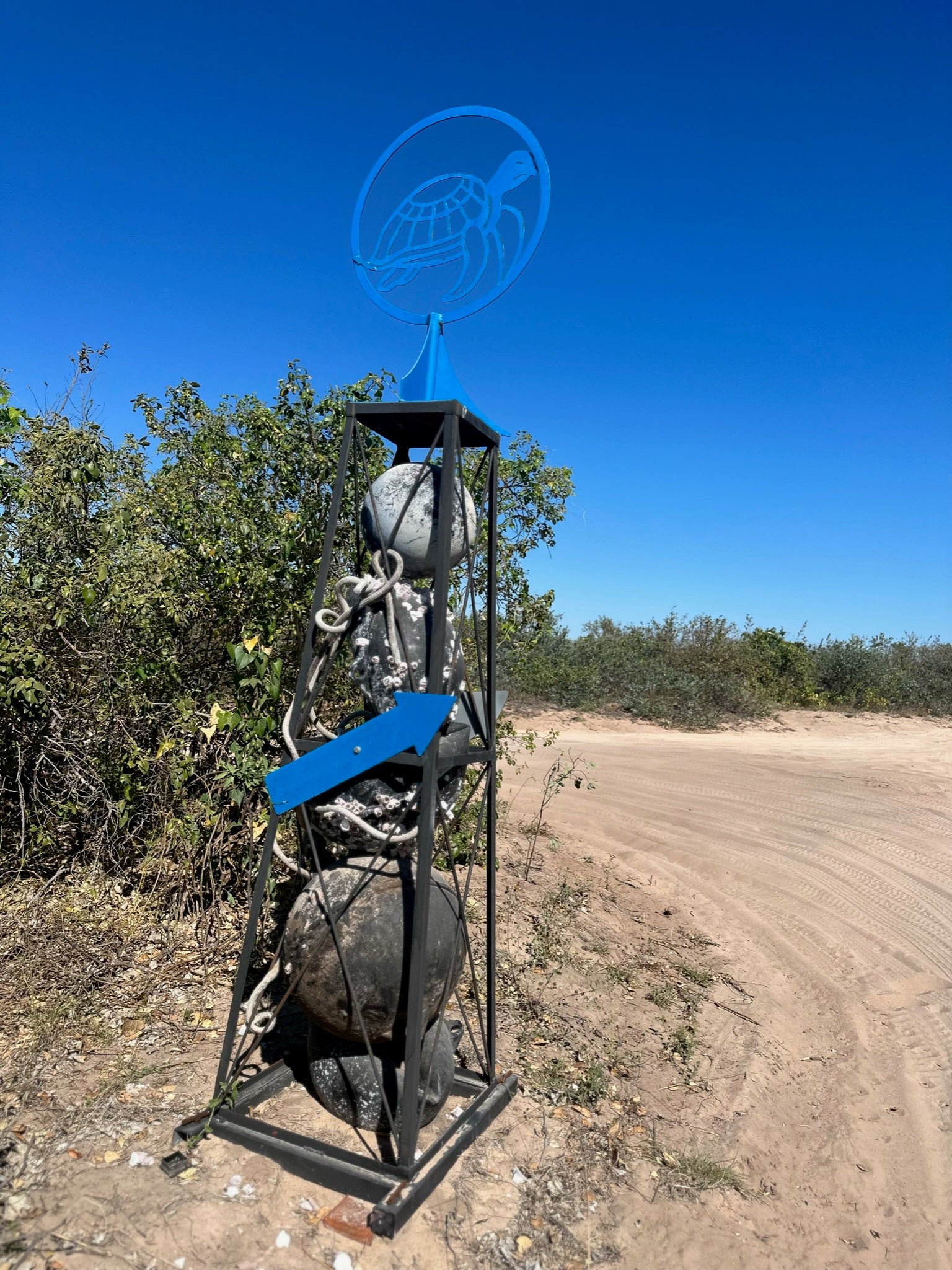
The Flatback Sea Turtle is one of the marine creatures that can sometimes be seen resting and feeding in the waters of Willie Creek. In the local Yawuru language, sea turtles are called Gurlibil. Flatbacks return to their natal beaches to nest, often coming ashore on Cable Beach just a few metres from where they themselves hatched as tiny hatchlings. Adult females usually nest between October and January, with hatchlings emerging from the sand between December and January. Cable Beach is also a popular spot for sunset 4WDs, and vehicle traffic can put nesting turtles and their nests at risk. That’s why our turtle sculpture looks a little grumpy – it’s a gentle reminder that our enjoyment of the beach must be balanced with care for the animals that rely on it. If you are lucky enough to see a turtle nesting or hatchlings emerging, please stay well back, keep lights off and give them space. Reducing rubbish and plastic, and using the bins provided, also helps ensure turtles can keep swimming the pristine waters of Willie Creek for generations to come.
B5
NO COPY YET
B6
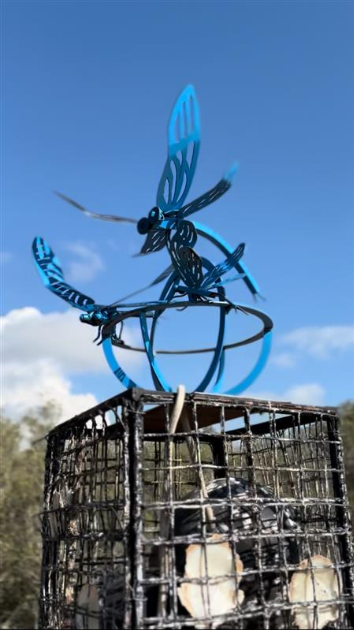
“One dragonfly doesn’t make a dry season” is a familiar saying around Broome as the weather begins to shift. Around April and May, as the humidity drops and we begin to enjoy fresher mornings, cooler nights and falling sea temperatures, dragonflies start to appear in large numbers. Together with manta rays, they are one of the most reliable signs that the wet season has ended and the dry season – and with it, the tourist season – has arrived. Dragonflies are agile fliers, capable of moving in six different directions: forward, backward, upward, downward, sideways and hovering like a tiny helicopter. They have
almost 360-degree vision, and around 80% of their brain power is dedicated to sight. They also play an important ecological role as predators of mosquitoes, midges, flies, bees, butterflies and other small insects, helping keep populations in balance. Of the more than 3,000 dragonfly species worldwide, about 320 are found in Australia, mostly around water. Often seen as symbols of good luck, dragonflies represent courage, transformation, joy and adaptability – fitting qualities for life in the Kimberley.
B7
Horses are a common sight around the Willie Creek track and surrounding wetlands. Many are thought to be associated with Waterbank Station, a government-owned pastoral lease that covers land to the north of Willie Creek. Purchased in 1996, Waterbank was intended to secure space for Broome’s future expansion, including the possible relocation of the Broome Airport from the middle of town and the infrastructure that might support it.
Other horses may be escapees from nearby pastoral leases such as Roebuck Plains and Kilto Station. Cattle also roam freely across these vast salt flats and grasslands. Horses and cattle tend to move most actively at dawn and dusk and often create their own tracks through the scrub and across the wetlands. This makes the surrounding roads and tracks potentially hazardous at any time of day or night. One particular bull is known to wander through the homestead gardens at night and in the early morning, much to the frustration of the gardener who regularly finds newly planted trees knocked over. The horse and cattle markers are a friendly reminder to watch for livestock on your journey and to drive cautiously on these remote tracks.
B8
The story of Willie Creek is deeply tied to the Pinctada maxima oyster – the largest pearl shell in the world. This oyster was first discovered in Roebuck Bay in 1861. The powerful tides, warm temperatures and nutrient-rich waters along the northern WA coast create perfect conditions for it to thrive. In the late 1800s and early 1900s, mother-of-pearl shell was in high demand for buttons and for decorative objects such as cutlery handles and hair combs. Divers initially free-dove in shallow water, holding their breath to collect shell. Many were local Aboriginal people, often referred to as “bare-pelt divers”, who worked without equipment at depths of up to 12 metres. As stocks in shallow water were depleted, deeper diving became necessary. By the early 1900s, divers were using heavy canvas suits, copper helmets, lead weight belts, metal boots and air pumped down through reinforced hoses from the lugger above. Fully dressed, a diver could weigh over 180 kilograms. It was treacherous work; divers faced sharks, strong currents, jellyfish,
decompression sickness, cyclones and the constant risk of infection. The pearling crews were highly multicultural – with Malays, Koepangers (from West Timor), Chinese, Japanese, Filipinos, Ceylonese and local Indigenous people all working together. Their combined efforts and sacrifices helped shape Broome into the unique, diverse town it is today. Modern pearl divers use full wetsuits, compressed air tanks and fast vessels designed for the extreme tidal conditions, along with strict safety procedures. Even so, it remains a demanding and dangerous job. The Diving marker is a reminder of the courage and resilience of all who have dived for shell, and a quiet tribute to those who lost their lives building the pearling industry that still supports Broome and Willie Creek.
R1
NO COPY YET
R2
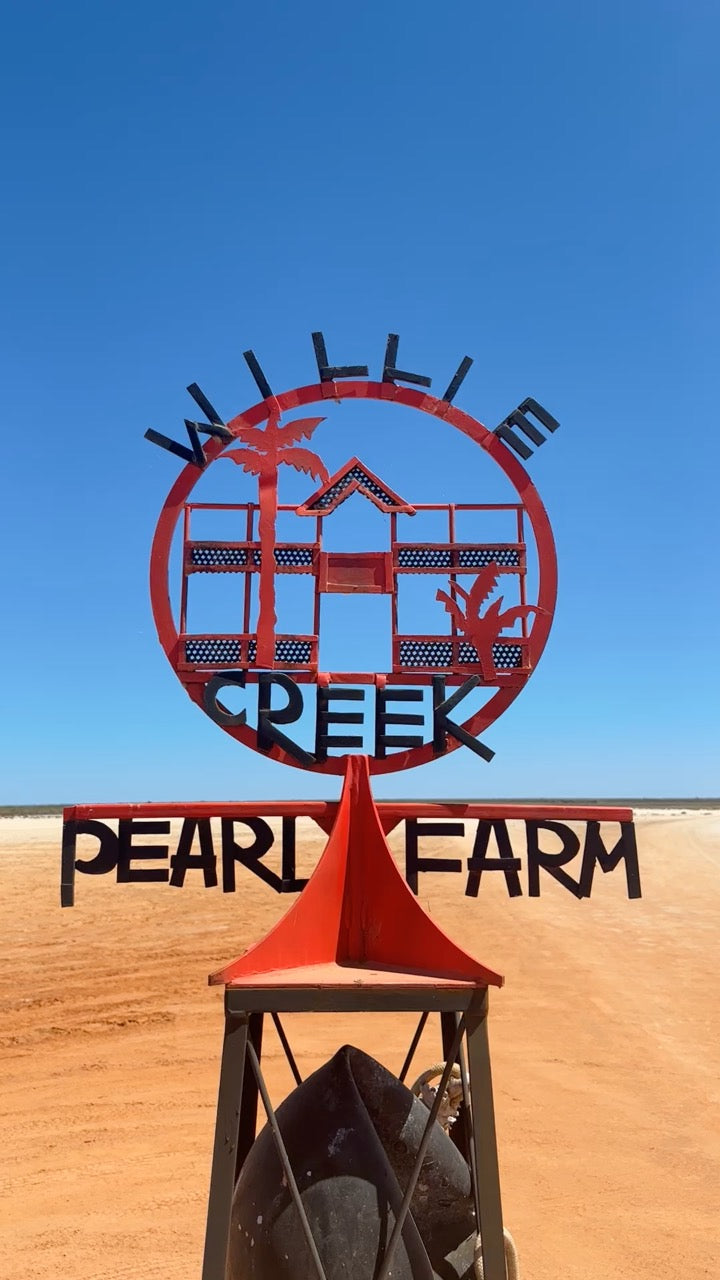
The Willie Creek Homestead was built in 1991 to showcase the pearling industry to visitors and now welcomes guests from all over the world each year. Its architecture is inspired by traditional Broome pearling masters’ cottages. A central block of rooms opens onto a wide verandah that wraps around the house, providing shade and airflow. Lattice shutters help control the heat and offer protection during storms. Similar architectural features can be seen in historic Broome, including the restored Captain Gregory’s House (now an art gallery near Matso’s Brewery). The homestead connects visitors directly to that era and style, while providing a relaxed, welcoming base for the modern pearl farm experience.
R3
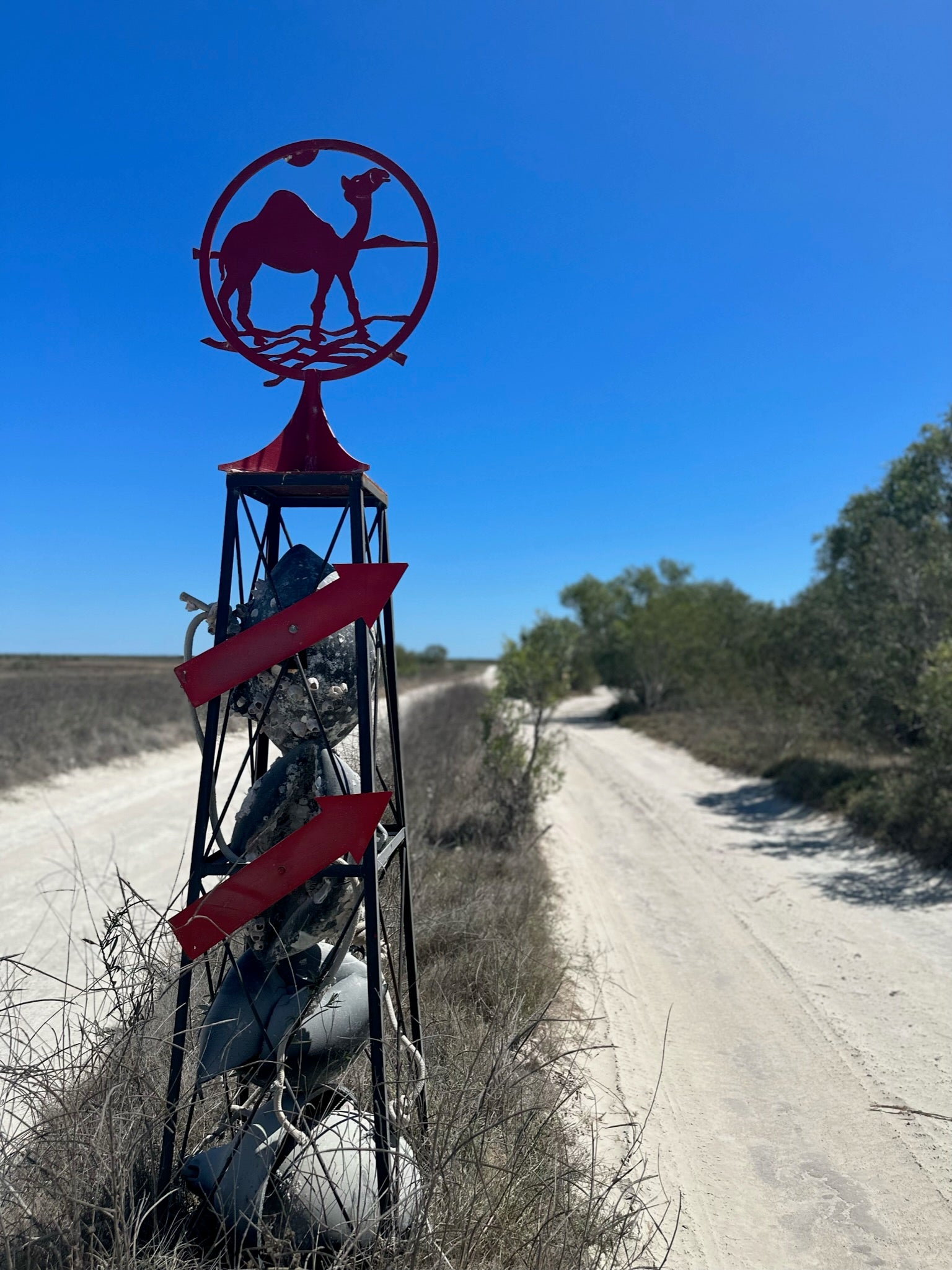
Afghan cameleers once travelled regularly through this region, visiting freshwater sources such as Coconut Wells and Willie Creek. They transported food, water, mail and medicine to pastoralists, religious missions, Indigenous communities and mining camps across northern and central Australia. Before rail and highways, they were often described as the “first railway” of the inland, with camel cartage depots established at many major ports and outposts. Their journeys through the Kimberley helped open up remote areas and supported the growth of stations and settlements, leaving a lasting cultural legacy along tracks like the one to Willie Creek.
R4
NO COPY YET
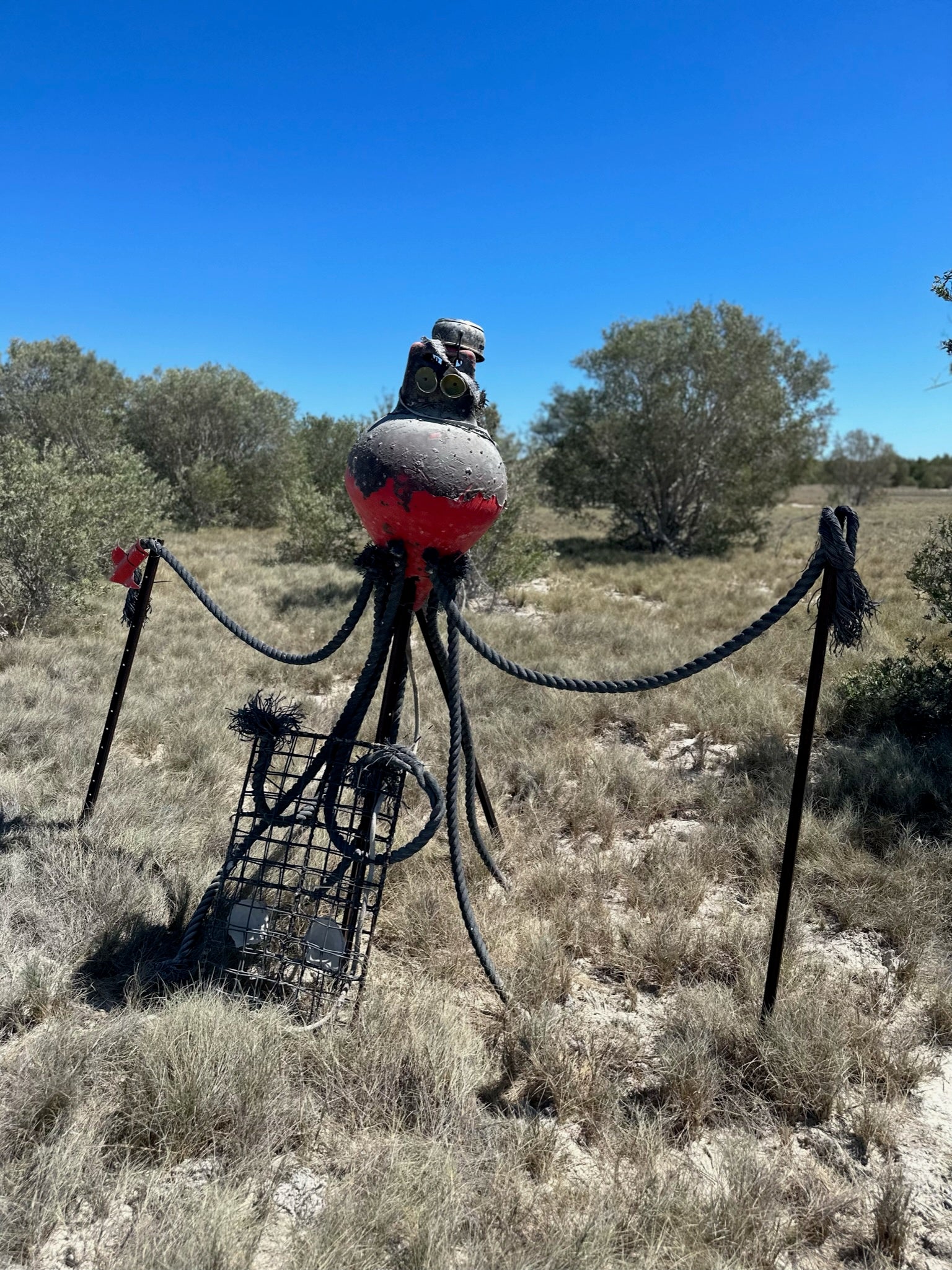
R5
NO COPY YET
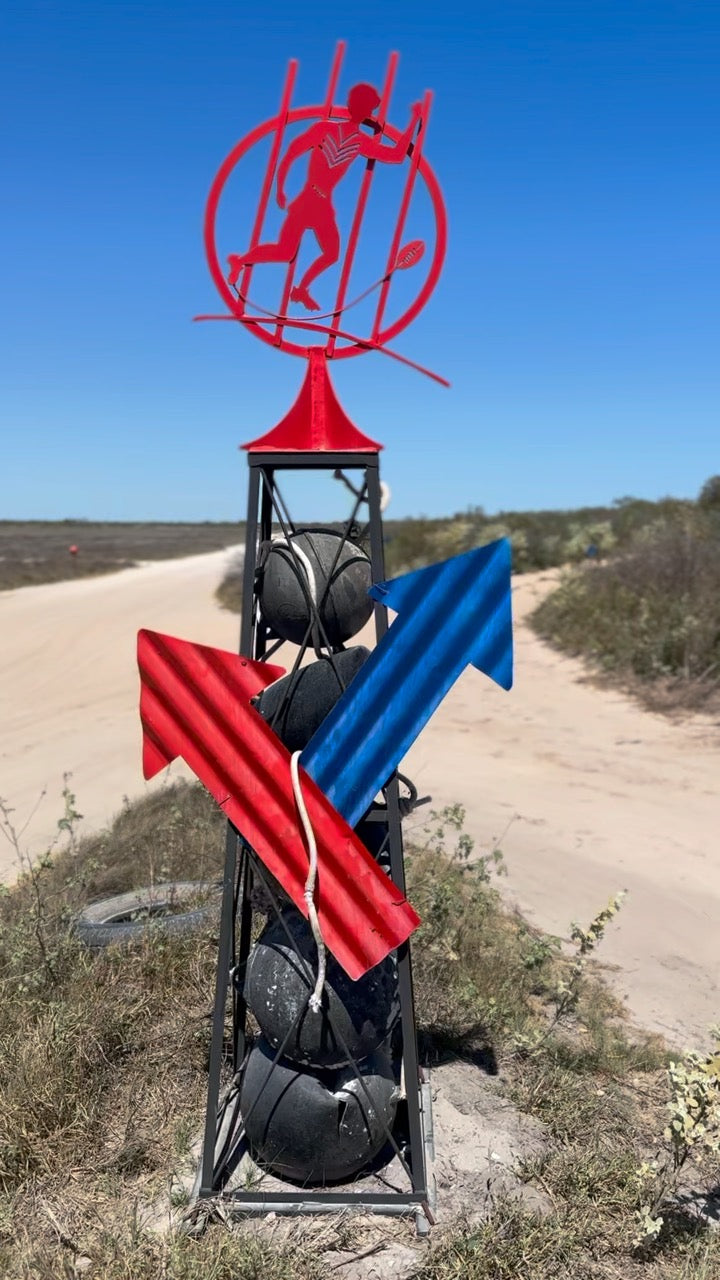
R6
NO COPY YET
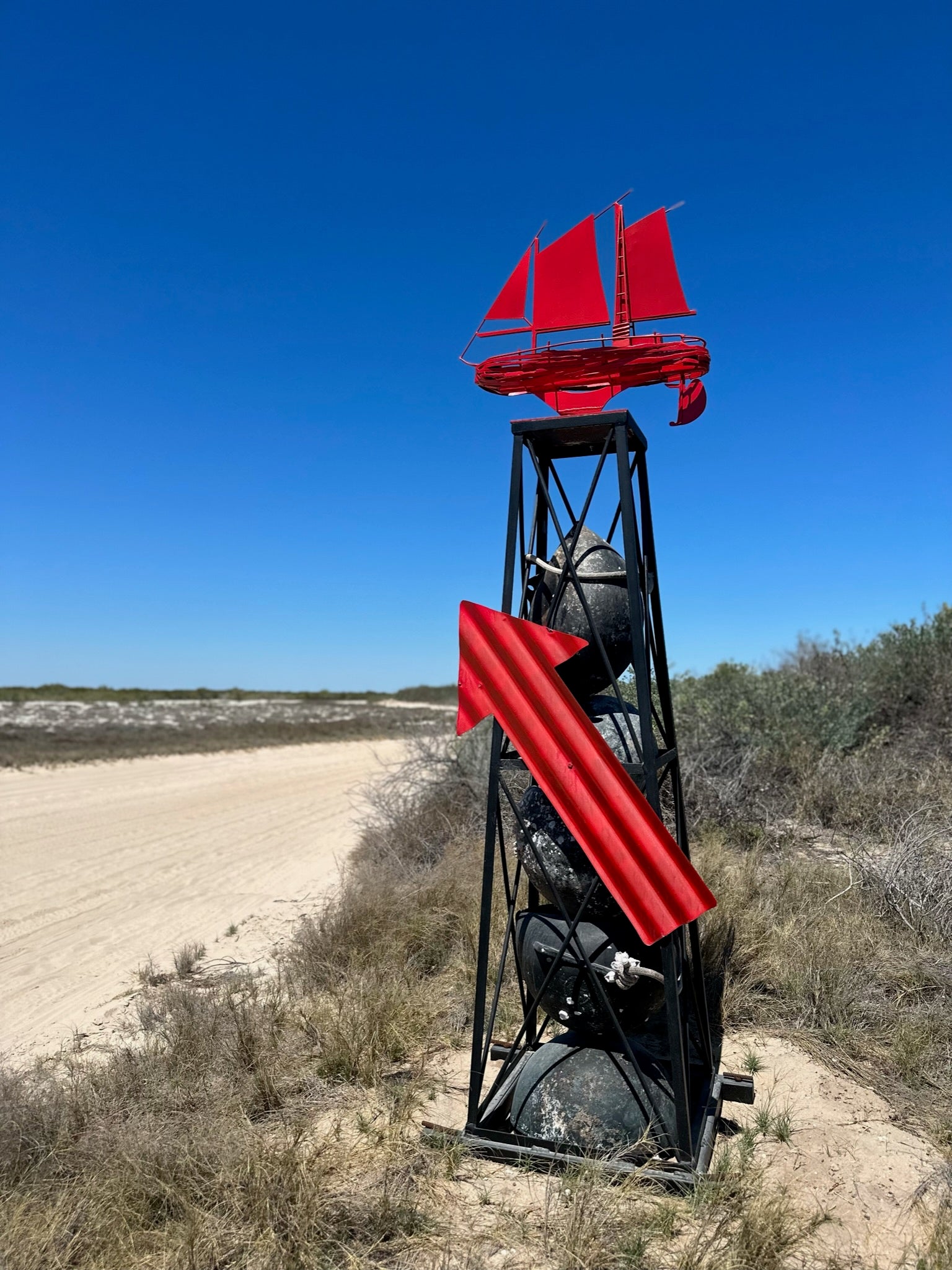
R7
NO COPY YET
R8
NO COPY YET
BR9
The salt flats and open country around Willie Creek Pearl Farm are managed under pastoral land tenures, and cattle are frequently seen roaming across the area. In the Kimberley, many stations and landholdings cover enormous acreages. Some are owned and managed by Indigenous corporations and Traditional Owner groups, while others belong to high-profile pastoral operations, including those associated with mining magnates such as Andrew Forrest and Gina Rinehart. Cattle usually move in the cool of early morning and late afternoon, and may graze close to or even on the track, creating traffic risks on the already bumpy roads. The sculpture “Bulls in the Long Paddock” plays on the fact that paddocks here are truly vast, and that local bulls seem to consider the Willie Creek homestead gardens part of their territory. One particularly “helpful” bull enjoys knocking over freshly planted trees, just to keep the gardener on their toes.
BR10
NO COPY YET
BR11
The story of Willie Creek is deeply tied to the Pinctada maxima oyster – the largest pearl shell in the world. This oyster was first discovered in Roebuck Bay in 1861. The powerful tides, warm temperatures and nutrient-rich waters along the northern WA coast create perfect conditions for it to thrive. In the late 1800s and early 1900s, mother-of-pearl shell was in high demand for buttons and for decorative objects such as cutlery handles and hair combs. Divers initially free-dove in shallow water, holding their breath to collect shell. Many were local Aboriginal people, often referred to as “bare-pelt divers”, who worked without equipment at
depths of up to 12 metres. As stocks in shallow water were depleted, deeper diving became necessary. By the early 1900s, divers were using heavy canvas suits, copper helmets, lead weight belts, metal boots and air pumped down through reinforced hoses from the lugger above. Fully dressed, a diver could weigh over 180 kilograms. It was treacherous work; divers faced sharks, strong currents, jellyfish, decompression sickness, cyclones and the constant risk of infection. The pearling crews were highly multicultural – with Malays, Koepangers (from West Timor), Chinese, Japanese, Filipinos, Ceylonese and local Indigenous people all working together. Their combined efforts and sacrifices helped shape Broome into the unique, diverse town it is today. Modern pearl divers use full wetsuits, compressed air tanks and fast vessels designed for the extreme tidal conditions, along with strict safety procedures. Even so, it remains a demanding and dangerous job. The Diving marker is a reminder of the courage and resilience of all who have dived for shell, and a quiet tribute to those who lost their lives building the pearling industry that still supports Broome and Willie Creek.
BR12
The Ta-Ta Lizard is a hit with children visiting the Kimberley. Its nickname comes from its habit of lifting and “waving” one of its front legs, making it look as though it is waving goodbye. These agile lizards are commonly found near water sources throughout northern Australia. They can run quickly and are sometimes seen sprinting on their hind legs. One theory is that the waving behaviour helps them cool down by lifting a hot foot off the ground and into the breeze. “Terri the Ta-Ta” waits near the front gate at Willie Creek Pearl Farm, waving visitors goodbye as they leave. It’s a playful farewell that we hope sends guests off with a smile and a safe journey home.
Commercial Pearl Farming
Pearl farming in Australia is a fully allocated and regulated fishing industry that is governed by a legislative act and controlled by the Department of Fisheries. It makes a considerable contribution to the overall annual value of the aquaculture industry in Australia and is particularly unique in that it exhibits sustainability in a “triple bottom line” context - pearling is sustainable ecologically, economically and socially. There are only 17 pearl farming licenses in Western Australia.
To assist the industry’s sustainability, the various units of allocated wild shell quota are distributed across three zones, which are individually assessed annually to determine the total allowable catch (TAC) for the year. This is calculated relative to the specific zones, juvenile stock recruitment and expected shell abundance. Shell is collected from these sites by divers for two reasons – for mother of pearl and for shells for seeding cultured pearls. Strict size guidelines of oysters exist for both purposes.
Willie Creek Pearls wild shell quota includes two units that have been specially allocated for the purpose of tourism. The commercial pearling operation has two lease sites and at any one time, there can be at least two years’ worth of stock in the water. The various stages of the oysters productive life are meticulously cared for and managed by the Willie Creek Pearls pearling team. As a result of our well managed fishery operations, we are proud to be Marine Stewardship Council Certified.
