

Which Track Do I Take?
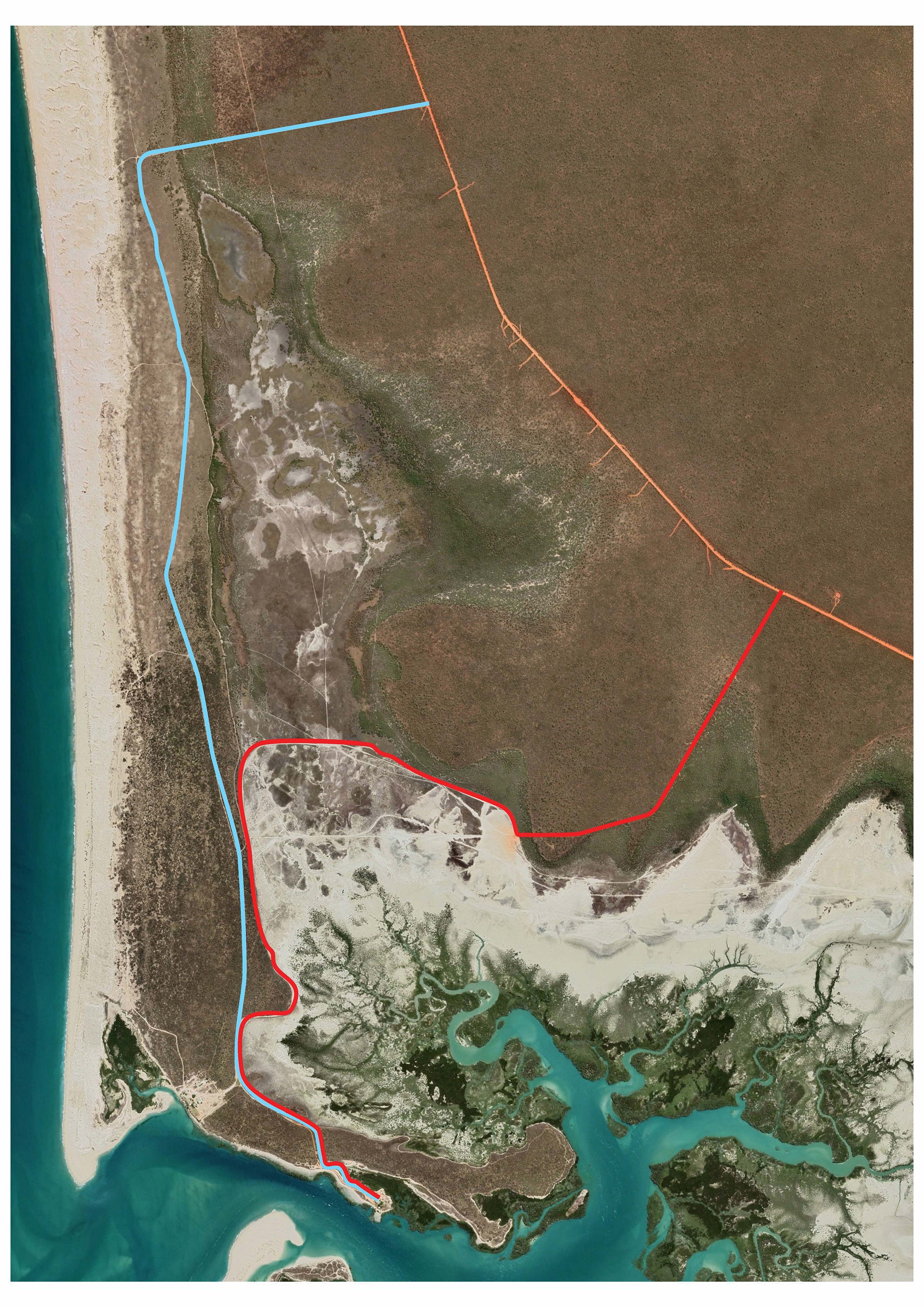
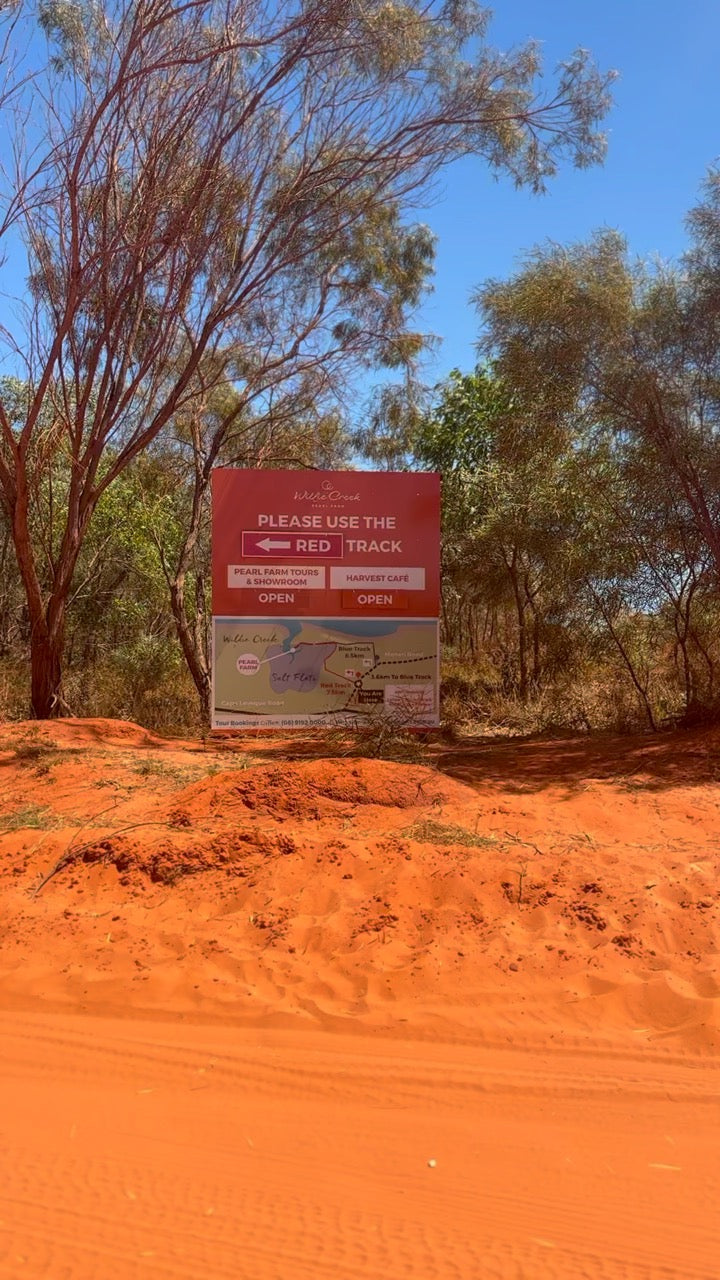
Both tracks lead to the same place, via alternate routes. We can switch from the red track to the blue track at any time due to the effect of any number of environmental conditions such as tide, rain or bush fire. Signage on the way to Willie Creek will indicate which path to take, as well as highlight any road closures. The roads on the way to Willie Creek Pearl Farm are maintained and managed by the Shire of Broome and the condition of them is out of our control.
Follow along as you make your way to the farm, learning about the local flora and fauna and the history of Broome, the Banfields and Willie Creek Pearl Farm as amazing sculptures, created by Artist in Residence Donna Fortescue, guide you on your way.
B1 Homestead Blue Track
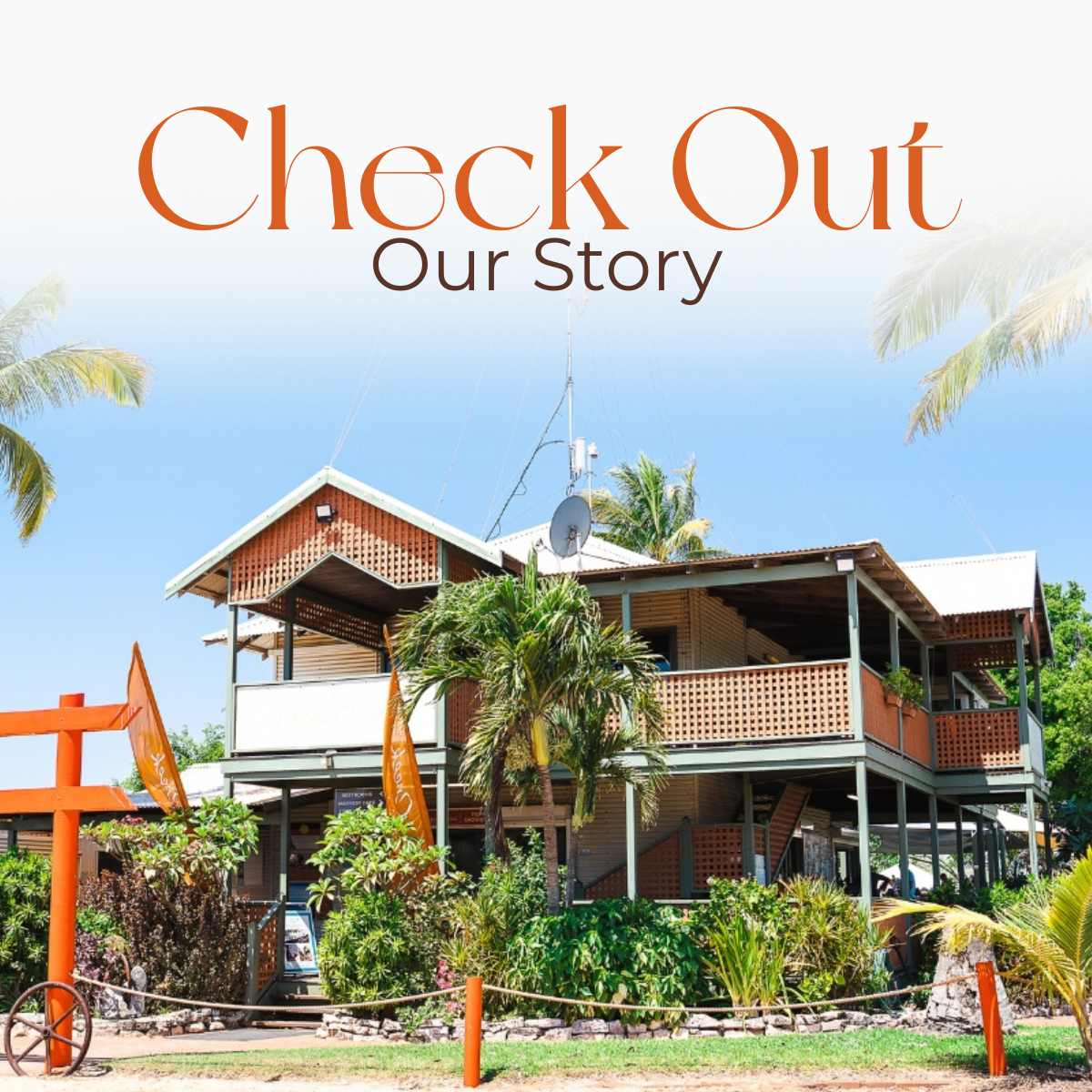
Built in 1991, the Willie Creek Homestead was created to showcase the pearling industry and welcome visitors throughout the year. Its architecture draws inspiration from traditional Broome pearling lugger cottages, such as the restored Captain Gregory’s House near Matso’s Brewery. This style features a central block of rooms opening onto a wide, enclosed verandah, with lattice shutters used to manage heat and airflow, a practical design shaped by Broome’s climate and maritime heritage.
Two tracks lead into Willie Creek: the Red Track, used most of the year, and the Blue Track, taken when high tides or seasonal rains make the Red Track impassable. The Homestead markers were chosen as the starting point for each journey to guide visitors safely toward the “farm,” echoing the way channel markers guide boats through tidal waterways.
These markers invite travellers to experience the hospitality, history and dramatic landscape that define Willie Creek. They act as visual anchors, welcoming guests, honouring the region’s pearling past, and celebrating the unique environment that draws people to the Kimberley.
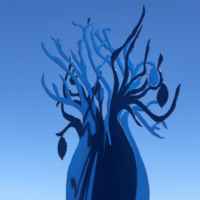
B2 The Blue Tree Project - Boab Tree
The Blue Tree Project, born in Mukinbudin in Western Australia’s Wheatbelt, encourages people to speak openly about mental health and to reach out when they, or someone they know, is struggling. By painting a Boab tree blue, we link this Wheatbelt initiative with the Kimberley, creating a shared gesture of support across our vast state.
The Boab (Adansonia gregorii) is an enduring symbol of the Kimberley. Its hardy nut, rich in vitamin C, once helped sailors prevent scurvy, quite literally a source of strength and wellbeing. Painting a Boab blue along the Blue Track brings together two regions and two communities, reminding travellers that caring for each other is just as important as navigating the rugged landscape.
As you journey through this harsh and beautiful country with people you may have only just met, we encourage a simple act of connection: check in with the person beside you and ask, Are you OK?
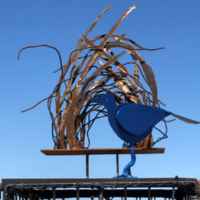
B3 Bower Bird
The Great Bowerbird (Chlamydera nuchalis) is one of the Kimberley’s most charming architects, they are part decorator, part collector, and full‑time show‑off. Found throughout the region, the males spend most of the year fussing over their bowers, gathering anything white and eye‑catching: snail shells, pearl shell, stones, bones, leaves, twigs… if it’s pale and portable, it’s treasure.
Their bower is an avenue of carefully arranged twigs and grass, the stage on which the male performs his courtship display. Once suitably impressed, the female mates within the bower, then promptly leaves to raise one or two chicks entirely on her own, usually in nests perched one to ten metres above ground. Meanwhile, the male continues his interior‑decorating career and may charm several females in a season. Breeding generally runs from August to February, with bowers refurbished or rebuilt each year like a very enthusiastic home‑renovation project.
Great Bowerbirds are mostly mid‑grey with darker wings, but males sport a lilac nape band they flash like a secret neon sign to attract attention.
This artwork celebrates the Kimberley’s most committed collector which is proof that good design, a tidy home, and a bit of colour can go a long way in the dating world.
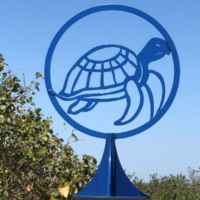
B4 Tommy the Grumpy Turtle
Flatback Sea Turtles are regular visitors to Willie Creek, drifting through the tides to feed before returning to Cable Beach to lay their eggs quite often just metres from where they themselves hatched. These turtles nest at night between October and January, with hatchlings emerging from December to January.
Unfortunately, their ancient ritual now competes with modern life. Heavy 4WD traffic at sunset along Cable Beach can disturb nesting females and disorient hatchlings, which is precisely why this turtle wears such a grumpy expression. You would be grumpy too if headlights kept interrupting your big moment.
If you’re lucky enough to witness a nesting turtle, keep your distance, switch off lights and let nature unfold quietly. Protecting these creatures ensures we continue seeing them glide through Willie Creek as they grow older.
And please, watch your rubbish. Plastics and debris can easily end up in the pristine waters they call home. Use the bins provided while on tour so our grumpy friend has fewer reasons to stay grumpy.
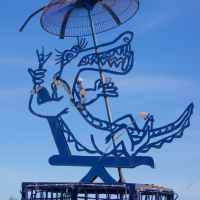
B5 Mr Crocodile to You
Crocodiles (Crocodylus porosus) are one of the last living links to prehistoric dinosaurs and three of these ancient locals call Willie Creek home. The resident male, Nigel, and his two female companions May and June, are often seen basking on the southern banks, perfectly content until another male dares to swim past, in which case Nigel’s hospitality ends abruptly.
Saltwater crocodiles are formidable creatures. Males can reach six metres, females up to 3.5 metres, and both can live around 70 years. They swim in explosive bursts of up to 29 km/h, and juveniles can launch their entire bodies straight into the air to snatch prey from low branches. It’s no wonder many Aboriginal and Torres Strait Islander communities regard them as symbols of cunning, strength and virility.
The “tower” crocodile here demonstrates that cunning perfectly, lounging in the sun, enjoying the food and wine from the Harvest Café, and proudly wearing Willie Creek pearls as if posing for a magazine cover.
We strongly recommend you don’t swim in the creek, but with luck you may spot Nigel and his ladies sunbaking nearby. Just admire them from a distance, they prefer their visitors with all limbs attached.
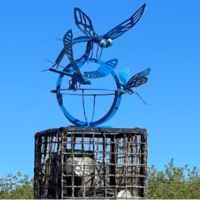
B6 Dragonflies
“One dragonfly doesn’t make a dry season” is a familiar saying around Broome, spoken as the weather begins its annual shift. By April and May, the humidity eases, mornings feel fresher, nights cool down and the ocean temperature drops. Locals know the true signs of the dry season’s arrival: the sudden appearance of dragonflies in great numbers and the graceful return of manta rays along the coast.
Dragonflies are remarkable creatures, capable of moving in six directions those being, forward, backward, upward, sideways and hovering like tiny helicopters. Their vision is extraordinary, with a 360‑degree field of view and most of their brain power dedicated to sight. Beyond their beauty, they play an essential ecological role, feeding on mosquitoes, midges, flies, bees, butterflies and other small insects. Of the more than 3,000 dragonfly species found worldwide, around 320 live in Australia, mostly near water.
In many cultures, dragonflies are seen as symbols of good luck, courage, transformation, joy and adaptability. Their arrival in Broome carries that same sense of optimism, marking the end of the wet season and the beginning of cooler, calmer months when visitors return and life shifts into its dry‑season rhythm.
This metal sculpture celebrates the dragonfly as both a seasonal messenger and a creature of mythic charm. Its presence honours the natural indicators that shape Kimberley life and invites viewers to pause, observe and appreciate the subtle transitions of the landscape. The dragonfly becomes a reminder of renewal, resilience and the quiet magic woven into the changing seasons.
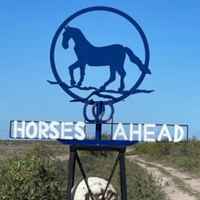
B7 Horses Ahead
Horses are a common sight around the Willie Creek track and surrounding wetlands. Many are thought to be associated with Waterbank Station, a government-owned pastoral lease that covers land to the north of Willie Creek. Purchased in 1996, Waterbank was intended to secure space for Broome’s future expansion, including the possible relocation of the Broome Airport from the middle of town and the infrastructure that might support it.
Other horses may be escapees from nearby pastoral leases such as Roebuck Plains and Kilto Station. Cattle also roam freely across these vast salt flats and grasslands. Horses and cattle tend to move most actively at dawn and dusk and often create their own tracks through the scrub and across the wetlands. This makes the surrounding roads and tracks potentially hazardous at any time of day or night. One particular bull is known to wander through the homestead gardens at night and in the early morning, much to the frustration of the gardener who regularly finds newly planted trees knocked over. The horse and cattle markers are a friendly reminder to watch for livestock on your journey and to drive cautiously on these remote tracks.
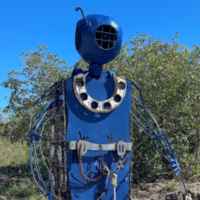
B8 Pearl Diver
The story of Willie Creek is deeply tied to the Pinctada maxima oyster – the largest pearl shell in the world. This oyster was first discovered in Roebuck Bay in 1861. The powerful tides, warm temperatures and nutrient-rich waters along the northern WA coast create perfect conditions for it to thrive. In the late 1800s and early 1900s, mother-of-pearl shell was in high demand for buttons and for decorative objects such as cutlery handles and hair combs. Divers initially free-dove in shallow water, holding their breath to collect shell. Many were local Aboriginal people, often referred to as “bare-pelt divers”, who worked without equipment at depths of up to 12 metres. As stocks in shallow water were depleted, deeper diving became necessary. By the early 1900s, divers were using heavy canvas suits, copper helmets, lead weight belts, metal boots and air pumped down through reinforced hoses from the lugger above. Fully dressed, a diver could weigh over 180 kilograms. It was treacherous work; divers faced sharks, strong currents, jellyfish,
decompression sickness, cyclones and the constant risk of infection. The pearling crews were highly multicultural – with Malays, Koepangers (from West Timor), Chinese, Japanese, Filipinos, Ceylonese and local Indigenous people all working together. Their combined efforts and sacrifices helped shape Broome into the unique, diverse town it is today. Modern pearl divers use full wetsuits, compressed air tanks and fast vessels designed for the extreme tidal conditions, along with strict safety procedures. Even so, it remains a demanding and dangerous job. The Diving marker is a reminder of the courage and resilience of all who have dived for shell, and a quiet tribute to those who lost their lives building the pearling industry that still supports Broome and Willie Creek.
R1 Entry Point
Channel markers were chosen as the starting point for this project because they symbolise safe passage. Just as they guide boats through shifting tides and hidden sandbars, these markers now lead visitors along the edge of Willie Creek and through the bush toward the homestead.
They also reflect the harsh maritime environment that shaped the pearling industry. The pearling panels and ocean buoys incorporated into the work remind us of the power of the tides and the resilience required to work in these waters. Historically, Willie Creek served as a cyclone refuge, sheltering pearl luggers as they rode out violent storms before continuing on to Broome.
Using channel markers connects land to sea, past to present, and visitors to the long pearling history embedded in this landscape.
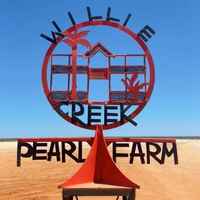
R2 Homestead Red Track
Built in 1991, the Willie Creek Homestead was created to showcase the pearling industry and welcome visitors throughout the year. Its architecture draws inspiration from traditional Broome pearling lugger cottages, such as the restored Captain Gregory’s House near Matso’s Brewery. This style features a central block of rooms opening onto a wide, enclosed verandah, with lattice shutters used to manage heat and airflow, a practical design shaped by Broome’s climate and maritime heritage.
Two tracks lead into Willie Creek: the Red Track, used most of the year, and the Blue Track, taken when high tides or seasonal rains make the Red Track impassable. The Homestead markers were chosen as the starting point for each journey to guide visitors safely toward the “farm,” echoing the way channel markers guide boats through tidal waterways.
These markers invite travellers to experience the hospitality, history and dramatic landscape that define Willie Creek. They act as visual anchors, welcoming guests, honouring the region’s pearling past, and celebrating the unique environment that draws people to the Kimberley.
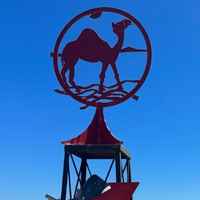
R3 Cameleers
Camels and their Afghan cameleers played a vital role in shaping life across Australia’s north. Long before modern transport, they carried food, water, mail and medicine to pastoral stations, missions and remote mining ventures, becoming the first “railway” through the inland. Their journeys often brought them to the freshwater holes at Coconut Wells and Willie Creek, essential stopping points as they travelled north and south across vast, unforgiving country.
Camel cartage bases were established at major ports, linking coastal towns with the interior and supporting communities that would otherwise have been isolated. The cameleers’ endurance, skill and cultural legacy remain woven into the history of the Kimberley.
This artwork honours their importance, recognising camels as the quiet workhorses of the north and the cameleers as the men who helped connect Australia long before roads and engines took over.
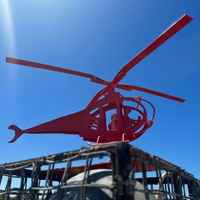
R4 Helicopter
Helicopters have become a familiar sight above Willie Creek, carrying visitors who come to experience the Kimberley’s spectacular coastline from the air. From above, the landscape reveals its secrets, turtles gliding through turquoise shallows, stingrays tracing the sand flats, and whales migrating along the coast. These aerial views have become an unforgettable part of the Broome experience.
Their presence has grown beyond tourism. Helicopters now support the movement of workers to James Price Point and the offshore gas platforms scattered along the coast. They play a vital role in fire and rescue operations, battling the long‑burning bushfires that sweep through the Kimberley each dry season. In pastoral country, helicopters have transformed cattle mustering, making it faster and safer across vast, remote stations.
As we look to the skies, the humble helicopter has become an essential tool in modern Kimberley life, their flight paths follow the camel train tracks that were once, in the region’s past. This sculpture acknowledges their importance, celebrating how they connect people, support industry and reveal the dramatic beauty of Willie Creek from above.
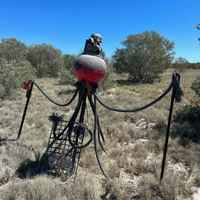
R5 Octopus
When we first started up here, well before we had a boat as part of the tour, we used to keep a panel of shell down near where the steps are now. Over a couple of days one shell kept disappearing from the panel, but it turned out I was blaming the wrong locals. On the third day I went down there and, as I looked over the ledge, I caught the culprit in the act – an octopus prying open one of the oysters looking for both a pearl and a feed.
R6 Footballers
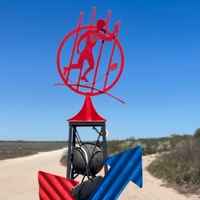
Australian Rules Football is woven deeply into Kimberley culture, shaping communities and producing some of the game’s most memorable talents. Many legends of the sport began their journeys in the North, where football is more than recreation, it represents identity, pride and connection.
The Banfield Family carries its own piece of this legacy. Bailey Banfield, now playing for the Fremantle Dockers, follows in the footsteps of Robert and Darren, who spent their youth playing for Wickepin, South Fremantle, the University of WA and the Broome Bulls. In true Kimberley fashion, they proudly claim to have taught Bailey everything he knows.
Football in this region is played in extreme conditions, heat, humidity and hard red‑dirt grounds that test endurance and resilience. Many players compete barefoot, travelling long distances by bus simply for the chance to take the field. The game brings communities together, bridging vast landscapes and celebrating the spirit of the Kimberley.
This artwork honours that tradition, recognising football as a powerful cultural thread that continues to inspire generations across the North.
R7 Pearl Lugger
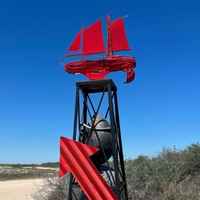
Pearling luggers were the backbone of the industry from the 1870s, designed to withstand Broome’s extreme tidal ranges and the shallow, sandy shores where they often rested on their sides for hours at a time. By the early 1900s, more than 350 luggers operated out of Broome, forming a fleet that worked the coast in search of valuable shell.
Willie Creek served as a safe haven during cyclone season, offering shelter to crews who sought protection from violent winds and unpredictable seas. Captains also favoured the creek as a place to anchor their vessels and keep their crews away from the temptations of Broome’s bars and brothels. With weather forecasting based largely on the rapid fall of a barometer, Willie Creek was often the closest and safest refuge available.
A traditional pearling lugger can still be seen today in Chinatown at Pearl Luggers on Dampier Terrace, a reminder of the vessels that shaped Broome’s maritime history and the resilience of those who worked aboard them.
R8 Willie Creek Pearls Dive Crew
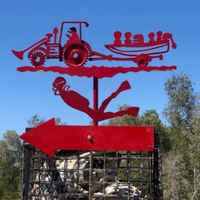
Pearl diving has transformed dramatically since the early days when divers simply held their breath and collected shell in shallow waters. As the search for pearl shell pushed deeper, the late 1800s introduced canvas suits, copper helmets, hand pumped air, reinforced hoses and heavy boots. The divers quite literally walked the sea floor while being dragged behind pearling luggers. It was dangerous, exhausting work, and every descent carried real risk.
Today’s divers look very different. Full body neoprene wetsuits, tanks, masks and fast ocean faring vessels have replaced the old gear, allowing crews to work safely and efficiently across the powerful tides of Willie Creek. The technology has changed, but the ocean’s unpredictability hasn’t changed, diving remains a job that demands skill, nerve and respect for the sea.
This artwork honours the modern diver: part technician, part adventurer and still essential to the pearling industry. As they head out each day, we wish them safe waters and remind them that their trusty tractor and the people who love them are waiting for their return.
BR9 Bulls in the Long Paddock
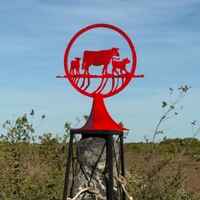
Bulls in the Long Paddock is inspired by the salt‑flat country surrounding Willie Creek Pearl Farm, where pastoral leases stretch across vast Kimberley landscapes and cattle roam freely. These stations, managed by Indigenous corporations, Traditional Owners, and large pastoral companies form a patchwork of land use that shapes daily life in the region.
Cattle move most actively at dawn and dusk, drifting across the rough roads that wind through the flats. Their presence is constant and unpredictable, a reminder that the long paddock is shared space. Travellers learn quickly to watch for the herd, because here the boundaries between pastoral land and everyday activity are fluid.
The sculpture takes its name from this reality. The bulls around Willie Creek often wander into the Pearl Farm gardens, treating them as part of their territory. One familiar bull has become a local character, known for knocking down newly planted trees and frustrating the gardener with his stubborn curiosity. His behaviour captures the humour and challenge of working alongside pastoral life.
By placing this bull at the centre of the artwork ""Bulls in the Long Paddock"", highlights the intersection of pearling, pastoralism and landscape. It celebrates the Banfield's connection to farming livestock in the past and the rugged, roaming presence of Kimberley cattle and the vast country they inhabit.
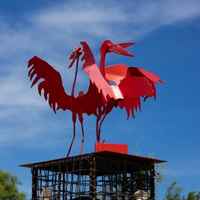
BR10 Dancing Brolgas
Brolgas (Antigone rubicunda) are graceful residents of the saltwater marshes and wetlands surrounding Willie Creek. Famous for their ritualised mating dances, they perform intricate displays either alone, in pairs, or occasionally in larger groups. Bonding for life, their breeding season follows the Kimberley’s rainfall, usually between February and May.
Despite their size, they are among the heaviest birds capable of flight, these beautiful birds move with striking elegance. Their resonant bugling calls, carrying up to two kilometres across the landscape, are a defining sound of the wetlands.
This track tower sits close to where brolgas are regularly seen, celebrating their beauty, their dance, and their deep connection to the country around Willie Creek.
BR11 Divers off to Work in the 2020's
Pearl diving has transformed dramatically since the early days when divers simply held their breath and collected shell in shallow waters. As the search for pearl shell pushed deeper, the late 1800s introduced canvas suits, copper helmets, hand pumped air, reinforced hoses and heavy boots. The divers quite literally walked the sea floor while being dragged behind pearling luggers. It was dangerous, exhausting work, and every descent carried real risk.
Today’s divers look very different. Full body neoprene wetsuits, tanks, masks and fast ocean faring vessels have replaced the old gear, allowing crews to work safely and efficiently across the powerful tides of Willie Creek. The technology has changed, but the ocean’s unpredictability hasn’t changed, diving remains a job that demands skill, nerve and respect for the sea.
This artwork honours the modern diver: part technician, part adventurer and still essential to the pearling industry. As they head out each day, we wish them safe waters and remind them that their trusty tractor and the people who love them are waiting for their return.
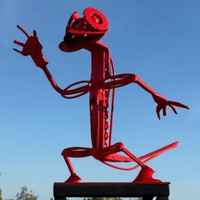
BR12 Terri the Ta-Ta
The Ta Ta lizard (Lophognathus gilberti) is one of the Kimberley’s most endearing small creatures, instantly recognisable to children and adults alike. Found near water sources across Northern Australia, these agile lizards are known for their remarkable speeds they are often darting away on their hind legs and for the distinctive gesture that gives them their name. When they lift and wave a front leg, it appears as though they are offering a cheerful farewell. While charming to watch, this behaviour is believed to help them cope with hot surfaces, raising their limbs to cool them in the breeze.
In this artwork, the lizard becomes a character in its own right. “Terri the Ta Ta,” as he is affectionately known, stands at the front gate of Willie Creek Pearl Farm, poised mid‑wave. His gesture is both playful and symbolic: a small, spirited ambassador bidding visitors goodbye as they depart the pearl farm. Terri’s presence captures the light‑hearted encounters that shape the Kimberley experience and celebrates those unexpected moments when wildlife and people cross paths in ways that feel both humorous and memorable.
The sculpture celebrates the Ta Ta Lizard’s personality and its connection to place. Terri’s wave becomes an invitation to pause, smile and appreciate the small wonders that inhabit the Kimberley landscape. As visitors leave Willie Creek, he offers a final gesture of goodwill, hoping their stay has been enjoyable and their journey home safe. Through Terri, the artwork honours the region’s unique wildlife and the joy it brings to those who meet it.
See More Art at the Farm
Artist Donna Fortescue has created a scenic insightful walk around the gardens of Willie Creek Pearl Farm, wonder the grounds and learn more about the land and history of Broome.
The Sculpture Trail will lead you on a journey through time with tangible monuments to historic figures, local fauna, homage to pearling and the Banfield Family's dynamic story.